When I was 25 years old, I had a boss whose life was work. The company had moved him from Phoenix to Miami to be the manager of our team. His Facebook feed was all news about our company, all his friends were from work, and a decade later, he has the same job. I had little respect for him outside the tasks of my job.
I’ll never forget the last time I saw him.
I had received an offer for more money at a company that better suited me. After two years working very hard and successfully for this company, I had just had my first child and was ready for the next step in my career. So, I gave my two weeks’ notice.
The manager pulled me into his office so we could go through my accounts and what needed to be done to transition my work. I asked him to confirm that I would at least get one week of pay, and he lied and told me they would give me the week. We spent hours going through all the information he would need. He said thank you because he knew only I had that information. He walked me to the door and said I would not get the week pay but had to leave immediately.
This is the kind of sad corporate person I don’t want my children to become (or myself!).
Homeschooling
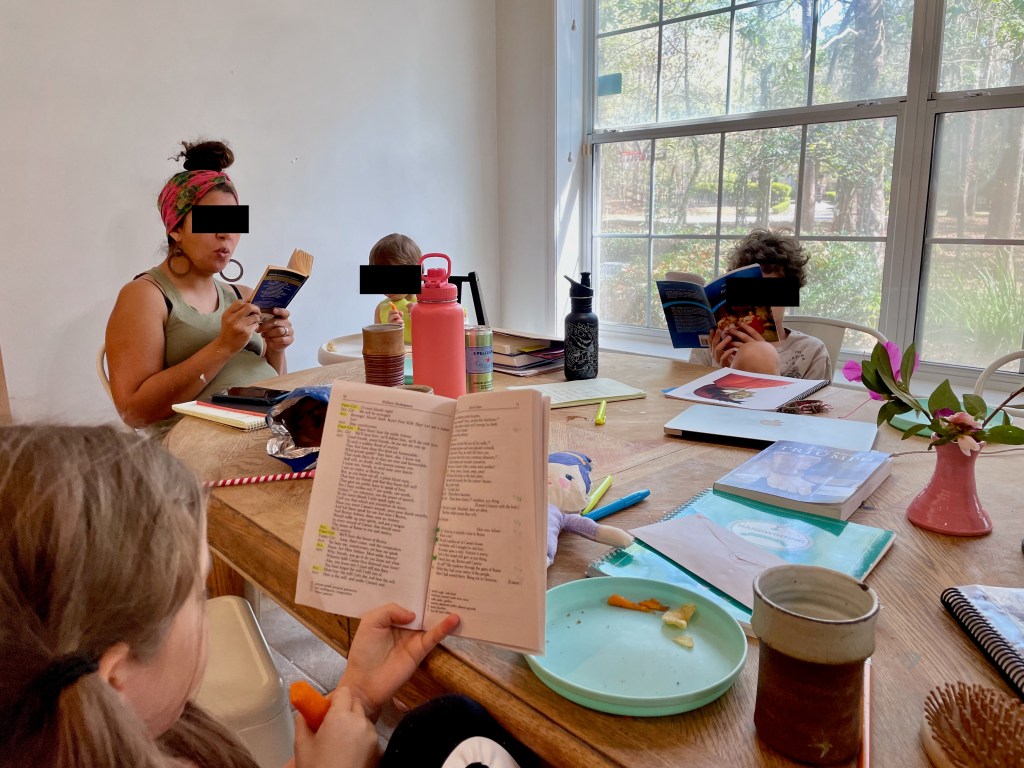
My wife, Corazon, homeschools are four kids (soon to be five!).
She sees homeschooling as her way to be part of building a full person, not just successful little mini-me’s she can brag about to our peers. (Sadly, I probably am the kind of dad that hopes my kids will become professional athletes and secretly compare my kid’s SAT scores with my friend’s kids… God help me! LOL)
Corazon’s view is she wants to see our children become adults that deeply care for others, understand their emotions, hunger for knowledge, and pursuit excellence… No matter what their career path. I’m coming around to the fact that she is right. My job is more than to raise kids that perform well in the workplace and get high-paying jobs.
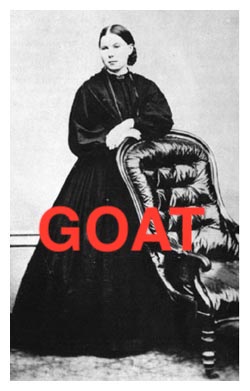
The thought leader for this form of education is undoubtedly, Charlotte Mason. To those of you who aren’t in the homeschooling cult-world like I am, Mason was an English educator who died in 1923. She’s sort of like the John D Rockefeller of homeschooling… Legend.
A quote that often surfaces from her writings is: “We spread an abundant and delicate feast in the programmes and each small guest assimilates what he can” (Towards a Philosophy of Education: Volume VI of Charlotte Mason’s Homeschooling Series: Vol. 6, p.183)
The idea is to spread the best materials we can find as educators and allow the child (or scholar) to feast on whatever suits their taste. The idea here is to allow the hunger of the scholar to naturally develop on the highest quality materials. Their differentiation from others will flourish.
For those of us in the professional world, endlessly scrolling LinkedIn posts of people celebrating their promotions, plugging their products, or using other company language and buzzwords, this idea of differentiated scholars ‘feasting’ on wonderful ideas sounds extremely appealing.
I’m so sick of being involved in the LinkedIn game posting about the products I sell and offering no differentiation to the world as to who I am as a human being.
I’m tired of facing bosses like the one I had when I was 25 who was so focused on his “flesh” not his “spirit.” Me leaving that job meant I was dead to him. The humanity had left his eyes because work was everything to him.
I don’t want to be involved in that game. So, I read some Charlotte Mason, and came up with some ideas on how I can bring my ‘spirit’ and not just my ‘flesh’ to my job. Here are my ideas on how Charlotte Mason’s teachings can help us at work.
Knowledge Versus Training:
At the core of Charlotte Mason’s teaching is the idea that education should be about knowledge not training, “there is no clear notion current as to what education means, and how it is to be distinguished from vocational training.” (Vol. 6, p. 183)
The idea here is that “men are spirits, that the spirit, mind, of a man is more than his flesh.” This must also be the case at the workplace. We aren’t supposed to develop our spirits as children only to become an adult and only worry about our vocation and flesh. Our minds are more than flesh.
That means work should really be an expression of my full mind including both flesh and spirit. The measure of me is not simply how productive I can be in my vocation, but my full self.
What I am learning as I partner with my wife homeschooling my children (scholars), playing pickup basketball Friday mornings, in my church on Sundays, in-depth articles from magazines, novels on my nightstand, or blogs about marketing and advertising software, all contribute to the full expression of my knowledge.
For the people that report directly to me, this means I’m not just to help them succeed vocationally but personally as well. Rather than seeing them as “students” or “employees”, they should be seen as “scholars” or “professionals”. Charlotte Mason says, “studies serve for delight.” So, part of my role as manager can be to gather some of the best resources I can find for improved knowledge.
Employees Not Managers Are The Responsible Persons
Charlotte Mason believe that, “The children, not the teachers, are the responsible persons: they do the work by self-effort”.
Managers often think they are doing the work. However, the employees are doing the actual work. Managers can “give sympathy and occasionally elucidate, sum up or enlarge”, but the actual work is done by the employees.
Learn by Doing
Charlotte Mason was big on a process she called, “narration”. A teacher does a read aloud of a passage and the scholar explains back what they heard.
“The mind can know nothing save what it can produce in the form of an answer to a question put to the mind itself.” (Vol. 6, p.16)
I believe this is the case at work as well. The process of an employee explaining to a manager what they think they should do helps to cement the correct knowledge in their minds. It is a process of learning by doing.
Managers shouldn’t give answers to questions, but help “elucidate, sum up or enlarge.” By answering questions, managers run the risk of employees not retaining that knowledge in their minds.
The way my wife homeschools has taught me that all people are made in the image of God. Including myself! I want to live in a world where professionals have a beautiful, wide variety of interests and knowledge that inform their work. I want to work with people who have real feelings outside of work that infuse their daily lives. And, that have the emotional capacity to empathize with those around them because of their own experiences.
If you enjoyed this content, subscribe here to my newsletter to receive future articles.
 Joshua Ballantine